In New Orleans, designing a foundation without addressing the underlying soft clays and organic silts of the Mississippi River delta is a gamble most structural engineers refuse to take. We see it in the lab every week: samples from the Lakeview and Gentilly areas that compress under minimal load, with moisture contents consistently above 60 percent. Stone column design becomes the practical solution for these conditions, distributing structural loads through a composite ground model that reinforces the native soil rather than replacing it entirely. The process demands precise input parameters—undrained shear strength profiles from SPT drilling and consolidation characteristics from our oedometer tests—to calculate column spacing, diameter, and the critical length needed to bypass the most compressible near-surface layers. Without this data, even a well-installed grid of stone columns will underperform, leading to long-term settlements that can tear apart slabs and utilities in this subsidence-prone city.
A well-drained stone column grid in New Orleans clays can reduce post-construction settlement by half—provided the lab data feeding the design captures the real consolidation rate.
Methodology applied in New Orleans
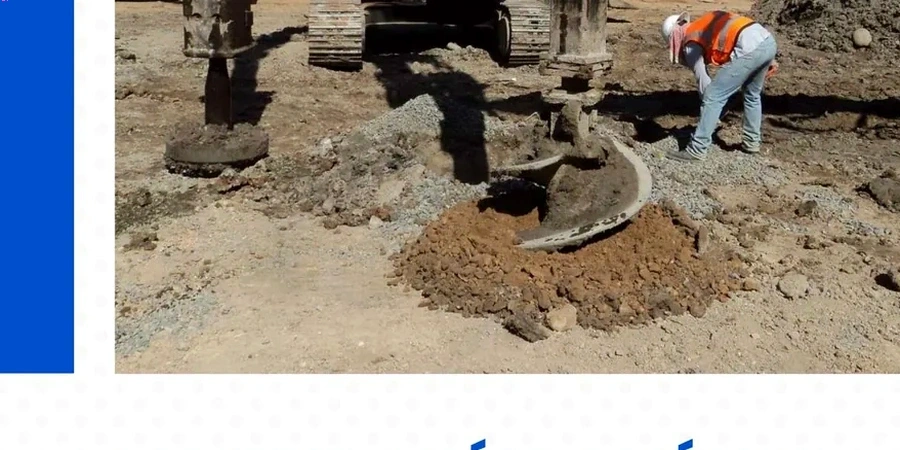
Live process video
Typical technical challenges in New Orleans
The rig moves in, and within the first hour of vibro-replacement, the foreman sees slurry boiling up around the vibrator—a sign that excess pore pressures are building faster than the silty clay can dissipate. In New Orleans, where the groundwater table sits just below the street surface, this is a common warning. If the lab underestimated the coefficient of consolidation from oedometer tests, the design will specify a column spacing too tight for the soil to drain between installation passes, triggering a massive loss of strength around each column and potential ground heave. We insist on step-loaded consolidation testing at in-situ stress levels rather than relying on correlations with liquid limit alone, because the organic content in these deltaic deposits skews the compression index and delays primary consolidation. A failed stone column installation in a constrained urban lot, with adjacent historic structures on shallow footings, is not just a technical failure—it becomes a legal and reputational liability for the entire project team.
Our services
Our New Orleans laboratory provides the soil characterization package that feeds directly into the stone column design process, from field exploration support to advanced lab testing:
Laboratory Testing for Ground Improvement
Consolidation, triaxial, and index tests run on Shelby tube samples extracted from target soft layers across the Greater New Orleans area, with reports formatted for direct input into Priebe or FEM design models.
Pre-Design Site Characterization
Coordination of SPT and CPT field campaigns in high-water-table conditions typical of Orleans and Jefferson Parishes, with quick turnaround on strength and compressibility parameters.
Post-Installation Verification Testing
Grain-size analysis of imported stone aggregate and in-situ density checks to confirm column integrity and drainage performance after vibro-replacement completion.
Questions and answers
What soil conditions in New Orleans make stone columns a suitable ground improvement method?
Stone columns work best in the soft, compressible clays and silts deposited by the Mississippi River that dominate the New Orleans subsurface. When undrained shear strength falls between 15 and 50 kPa and consolidation settlements exceed tolerable limits for shallow foundations, vibro-replacement stone columns provide both reinforcement and drainage, accelerating settlement and increasing bearing capacity.
How do you determine the correct stone column spacing and depth for a New Orleans site?
The design relies on lab-derived consolidation parameters (Cc, cv) and undrained shear strength profiles from SPT or CPT data. We run incremental loading oedometer tests at in-situ stress levels on undisturbed Shelby tube samples to calculate the settlement reduction factor and the required column length to punch through the most compressible near-surface strata, typically reaching depths of 10 to 18 meters in the delta.
What is the typical cost range for stone column design testing services in New Orleans?
A complete laboratory testing package supporting stone column design in the New Orleans area generally falls between US$1,580 and US$5,860, depending on the number of consolidation and triaxial tests required and the complexity of the soil profile across the site.
How does high groundwater in New Orleans affect stone column installation and design?
The shallow groundwater table—often less than 1.5 meters deep—requires the design to account for reduced effective stresses and higher neutral pressures during vibro-replacement. Our lab program measures in-situ moisture content and runs CU triaxial tests to model the pore pressure response, ensuring the column spacing is adjusted so that radial drainage can dissipate excess pressure between installation passes.
What ASTM standards govern the lab testing for stone column design?
The key standards include ASTM D2487 for soil classification, ASTM D1586 for SPT sampling, and ASTM D2435 for consolidation testing. We follow these protocols rigorously to produce design parameters—stress concentration ratio, angle of internal friction of the stone, and consolidation coefficient—that engineers can rely on for ground improvement analysis.