Building in New Orleans demands a clear understanding of what lies beneath the surface. The city's complex geology, shaped by the Mississippi River delta, means that subsurface conditions can vary dramatically from one lot to the next. ASCE 7 and the International Building Code (IBC) require thorough geotechnical investigations, and the Standard Penetration Test (SPT), governed by ASTM D1586, remains the most practical tool for this task. The Standard Penetration Test provides engineers with quantifiable N-values, a direct measure of soil density and consistency. For a city sitting at or below sea level with a high water table, these SPT numbers are not just data points; they are the foundation of every safe structural decision. Before finalizing a foundation plan, pairing the SPT data with a detailed grain-size analysis helps to classify the silty and clayey layers typical of the region.
In New Orleans, an SPT N-value of less than four blows per foot is not a surprise; it is a predictable reality that must be engineered for from the very first sketch.
Methodology applied in New Orleans
Typical technical challenges in New Orleans
A recent project in the Warehouse District involved a proposed five-story mixed-use building. The initial SPT values in the upper 20 feet were alarmingly low, with N-values between 2 and 4, indicating very soft clay. Ignoring these SPT results would have led to a conventional shallow footing design destined for excessive settlement. The Standard Penetration Test data forced a critical design change: the structural engineer switched to a deep foundation system supported by driven piles. This Standard Penetration Test-driven decision, while increasing the upfront foundation cost, prevented a future of cracked slabs, misaligned doors, and potential litigation. In New Orleans, skipping the Standard Penetration Test is not a cost-saving measure but an acceptance of catastrophic risk in slow motion.
Our services
Our New Orleans team provides a complete geotechnical package built around the Standard Penetration Test, ensuring that every critical piece of the subsurface puzzle is addressed for your project's specific site conditions.
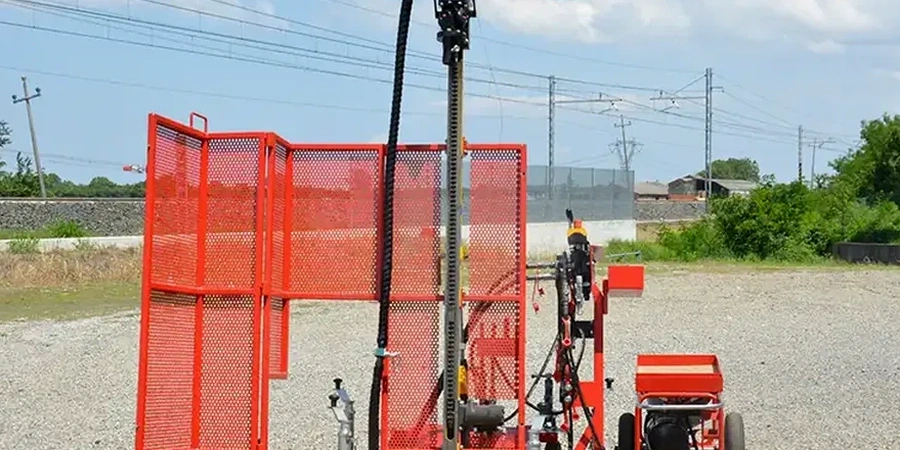
Standard Penetration Test Drilling
Full-service SPT drilling with automatic hammer systems, mud-rotary techniques for high-water-table conditions, and detailed field logging by experienced drillers.
Foundation Design Recommendations
Interpretative reports that translate N-values into allowable bearing pressures, pile capacities, and settlement estimates for shallow and deep foundation options.
Liquefaction Susceptibility Screening
Rapid assessment of seismic risk using SPT-based empirical methods for sites located within the Gulf Coast's liquefaction-prone alluvial plains.
Questions and answers
How much does a Standard Penetration Test cost for a single-family home lot in New Orleans?
For a typical residential project in the New Orleans area, the cost for an SPT investigation usually ranges from US$600 to US$850 per borehole. The final price depends on access conditions, required depth, and the number of boreholes needed to satisfy IBC requirements.
Why is the Standard Penetration Test preferred over a Cone Penetration Test (CPT) in the New Orleans area?
While CPT offers continuous profiling, the SPT remains essential in New Orleans because it recovers a physical soil sample. In the region's complex deltaic deposits, visual inspection and laboratory testing of the retrieved split-spoon sample are crucial for accurately identifying thin silt seams, organic content, and shell fragments that a friction sleeve alone might misinterpret.
How deep do you typically drill for an SPT investigation in New Orleans?
For shallow foundations on residential or light commercial structures, we typically advance the SPT to a depth of 30 to 40 feet. For deep foundations, such as driven piles, the Standard Penetration Test boreholes often extend to 80 or 100 feet to penetrate through the soft clays and into the Pleistocene-age bearing strata.