New Orleans grew from a swampy colonial outpost into a major port by forcing the Mississippi River into submission with levees and pumps. That history left a geotechnical reality: most of the metro area sits on soft, recent alluvial deposits, where water moves through silts, clays, and hidden sand lenses. A standard borehole log tells you what the soil is, but not how fast water flows through it. Field permeability testing in New Orleans—specifically the Lefranc method in low-permeability strata and the Lugeon test in fractured or sandy zones—delivers that direct measurement. The city's average rainfall of 63 inches a year and groundwater tables barely five feet down make in-situ hydraulic conductivity values far more reliable than lab estimates. When we combine these tests with an spt-drilling campaign, we correlate permeability directly with the SPT profile, something particularly useful in the variable point-bar deposits under Metairie and Gentilly.
In New Orleans, a permeability test is not a formality—it is the difference between a dry excavation and a flooded site halfway through the first pour.
Methodology applied in New Orleans
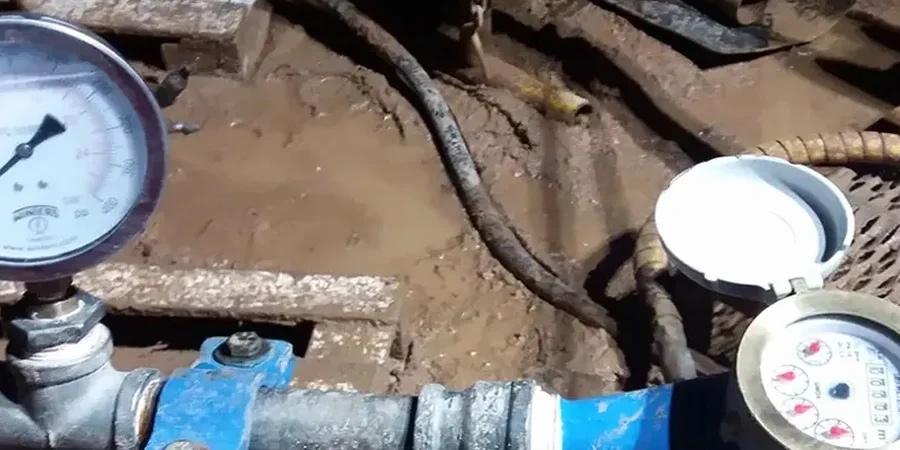
Live process video
Typical technical challenges in New Orleans
The classic mistake we see in New Orleans is relying on grain-size correlations or textbook permeability values for the Beaumont and Prairie Terrace formations. A contractor assumes the fat clay at 15 feet is 'impermeable' because it has 80 percent fines. Then they open a cut, the water seeps in through desiccation cracks and old root channels, and suddenly they are pumping 50 gallons per minute into the street drains. That delay costs days. Field permeability testing with the Lefranc method catches that secondary permeability—the macroporosity that lab tests on a two-inch Shelby tube sample simply cannot see. Another frequent error is running Lugeon tests at a single pressure stage and calling it done. The standard requires at least three pressure steps to identify laminar versus turbulent flow regimes. Skipping that step masks the soil's real behavior under the hydraulic gradients that dewatering and flood protection systems actually impose in this part of Louisiana.
Our services
Our field permeability program in New Orleans covers the full range of in-situ hydraulic testing, adapted to the local geology of the Mississippi River deltaic plain. Each test is designed around the specific soil conditions encountered in the boring, not a one-size-fits-all recipe.
Lefranc Test (Variable and Constant Head)
Designed for low-permeability cohesive soils typical of New Orleans' upper strata. We isolate the test interval with a pneumatic packer and measure flow under controlled head conditions, following ASTM D6391 procedures. Results are reported as hydraulic conductivity in cm/s, with full time-drawdown curves.
Lugeon Test in Fractured or Sandy Media
Applied in the deeper Pleistocene sands and any zones with secondary permeability. We step through five pressure stages to evaluate laminar versus turbulent flow, hydrofracturing potential, and the need for permeation grouting. The report includes Lugeon values and equivalent hydraulic conductivity.
Questions and answers
What does a field permeability test cost in New Orleans?
A single Lefranc or Lugeon test interval typically runs between US$650 and US$1,120, depending on depth, access conditions, and the number of pressure stages required. Mobilization is a separate line item and varies with the distance from our equipment yard. We provide a fixed-price scope of work before mobilizing, so there are no surprises.
How do you decide between a Lefranc and a Lugeon test for my New Orleans site?
The decision is driven by the soil type and expected permeability. In the soft clays and silty clays of the upper 40 to 50 feet—the typical New Orleans profile—the Lefranc test with a variable or constant head setup is the right tool. If the boring log shows sands, gravels, or fractured material where water take is high, we switch to the Lugeon method with a packer and multiple pressure stages. Often a single boring will include both methods at different depths.
How long does it take to get results from a field permeability test?
A single test interval takes about 30 to 90 minutes to complete in the field, but a full Lugeon profile with five pressure stages at one depth will run closer to two hours. We provide preliminary values within 24 hours by email, so the dewatering contractor can move forward. The final signed report with QA/QC documentation and interpretation follows within three to five business days.