The International Building Code (IBC) and ASCE 7 classify much of the New Orleans metro area as Site Class E or F due to the deep, soft alluvial clays deposited by the Mississippi River. Any foundation design here that skips a rigorous soil mechanics study is gambling with differential settlement. We run laboratory tests under ASTM D2487 for classification and ASTM D1586 for SPT correlations, building a geotechnical model that anticipates long-term consolidation behavior. In neighborhoods from the French Quarter to Lakeview, the stratigraphy can shift from sandy point bars to plastic fat clays within a single lot, demanding more than a generic bearing capacity assumption. When the subsurface profile shows highly compressible layers, we integrate findings with a stone columns analysis to evaluate ground improvement alternatives before structural loads are locked in.
In New Orleans, the difference between a successful foundation and a settling structure is knowing the consolidation behavior of the clays between 10 and 40 feet deep.
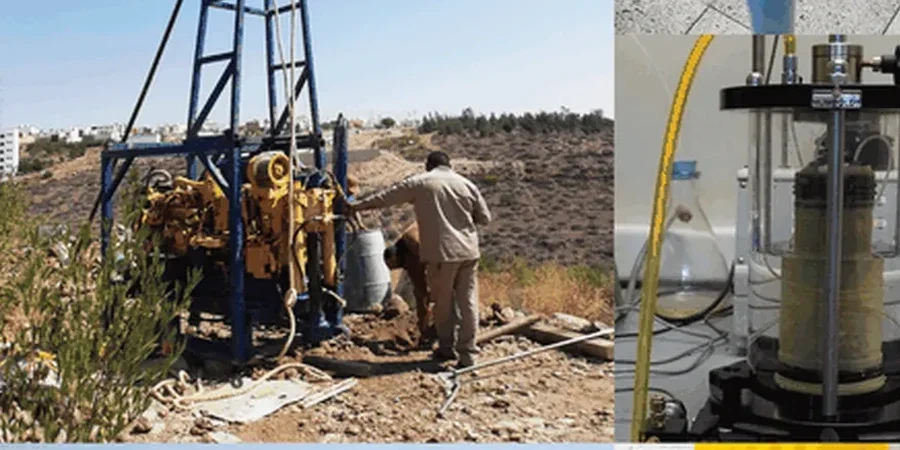
Methodology applied in New Orleans
Typical technical challenges in New Orleans
Subtropical humidity and frequent storm surges impose a demanding environment for geotechnical work in New Orleans. The high water table and organic content in near-surface soils accelerate biochemical degradation, which can reduce undrained shear strength over time if not properly characterized. A soil mechanics study that omits consolidation testing on the upper thirty feet of soft clay misses the primary mechanism behind street subsidence and utility trench collapse, both chronic issues in the metropolitan area. For sites near the Industrial Canal or the Lake Pontchartrain shoreline, we evaluate liquefaction susceptibility under the seismic demands of ASCE 7-22, even though the region's seismicity is moderate, because loose saturated sands in a fluvial environment can still trigger flow failures during a distant event. The cost of ignoring these analyses is measured in cracked grade beams and misaligned pile caps.
Our services
Our soil mechanics studies in New Orleans deliver the parameters that structural engineers need for foundation design, excavation support, and settlement analysis. Each study is tailored to the specific formation encountered, from the natural levee deposits near the river to the backswamp clays further north.
Foundation parameter determination
We provide bearing capacity, modulus of subgrade reaction, and settlement predictions for shallow and deep foundations in soft deltaic soils.
Consolidation and settlement analysis
Using oedometer test results, we calculate primary and secondary consolidation settlement magnitudes and rates for the proposed structural loads.
Liquefaction screening
We apply simplified procedures per ASCE 7-22 to assess liquefaction triggering in saturated granular lenses found within the alluvial profile.
Retaining wall design parameters
We determine active, at-rest, and passive earth pressure coefficients along with drainage recommendations for cantilever and anchored walls.
Questions and answers
What depth of investigation is typical for a soil mechanics study in New Orleans?
We usually investigate to depths between 40 and 80 feet, depending on the foundation type. For shallow footings on improved ground, 40 feet often suffices. For deep pile foundations, we extend borings deeper to capture the full compressible layer thickness and locate a competent bearing stratum.
How do you handle the high water table during sampling?
We use hollow-stem auger drilling with mud rotary techniques where needed to keep the borehole stable below the groundwater table. Thin-walled Shelby tubes push into the soft clays to recover undisturbed samples for consolidation and triaxial testing. The water level is recorded at each boring and monitored with piezometers when the project requires it.
What is the typical cost range for a soil mechanics study?
For a standard residential or light commercial lot in the New Orleans area, the cost generally ranges from US$2,740 to US$4,950, depending on the number of borings, sampling depth, and laboratory testing suite required by the structural engineer.
Which laboratory tests are essential for foundation design on soft clay?
At minimum, we recommend Atterberg limits, one-dimensional consolidation, and unconfined compression or triaxial shear tests. These provide the plasticity characteristics, settlement potential, and undrained shear strength needed to design footings or piles in the compressible clays common across the New Orleans metro area.