A three-story mixed-use building near City Park started showing cracks just six months after construction. The culprit wasn't the concrete mix or the steel placement — it was the foundation design, which never accounted for the 20-foot layer of highly compressible organic silts underneath. In New Orleans, where much of the city sits at or below sea level with a groundwater table just a few feet down, shallow foundation design isn't a standard template exercise. Every project demands a site-specific bearing capacity analysis that integrates the complex stratigraphy of the Mississippi River delta. Our team has worked across Orleans Parish, from the stiff Pleistocene terraces near Metairie Road to the challenging soft clays of Gentilly, developing footing solutions that work with the soil rather than against it. Before finalizing your structural plans, consider combining our analysis with CPT testing to obtain continuous soil behavior profiles without disturbing the sample structure.
In New Orleans, shallow foundation design is controlled not by the strong layer you can reach, but by the weak layer you must accommodate.
Methodology applied in New Orleans
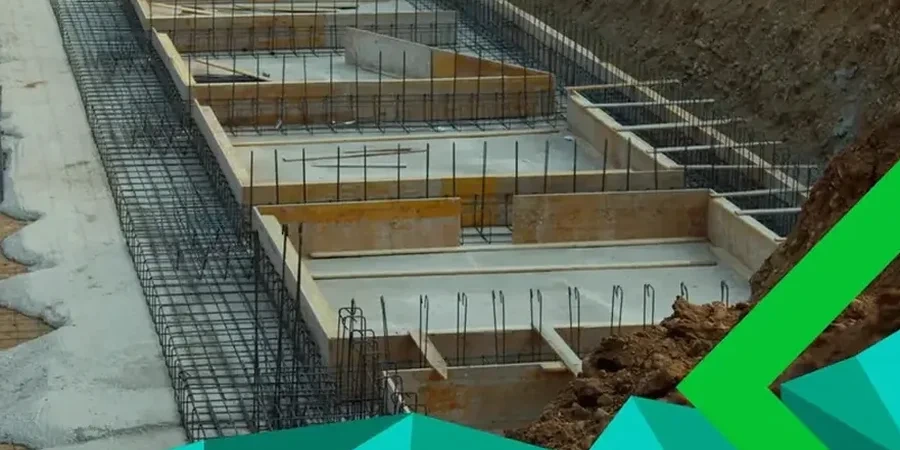
Typical technical challenges in New Orleans
Comparing two sites just three miles apart tells the story of New Orleans geotechnical risk. A project in the Garden District sits on relatively competent Pleistocene deposits — sands and stiff clays that typically deliver 2,500 psf bearing capacity with minimal settlement. But move east toward the Ninth Ward, and you're building on Holocene alluvium: 30 feet of soft, normally consolidated clays with undrained shear strengths under 500 psf. The same footing design that worked uptown will experience unacceptable differential settlement here. High groundwater, common across the entire city, introduces buoyancy effects that reduce effective stress and bearing capacity — something standard presumptive bearing values from code tables completely miss. Organic content in near-surface soils accelerates long-term secondary compression, a mechanism that can cause settlement to continue for years after construction if not properly modeled during design.
Our services
Our shallow foundation design services cover the full engineering cycle for projects in the greater New Orleans area, from preliminary site characterization through construction-phase support. Each scope is tailored to the specific subsurface conditions encountered.
Bearing Capacity & Settlement Analysis
We compute allowable bearing capacity using both analytical methods (Terzaghi, Meyerhof, Vesić) and numerical models calibrated to site-specific SPT and laboratory data. Settlement predictions include immediate, consolidation, and secondary compression components.
Foundation Type Selection & Sizing
We evaluate isolated footings, combined footings, and mat foundations based on structural loads, soil profile, and tolerance to differential movement. Deliverables include plan dimensions, embedment depths, and reinforcement recommendations per ACI 318.
Construction Phase Geotechnical Support
We provide subgrade preparation inspection, proof-rolling evaluation, and fill compaction testing during foundation construction. Our team responds to RFIs and reviews submittals to ensure compliance with the geotechnical recommendations.
Questions and answers
What is the typical cost range for a shallow foundation design report in New Orleans?
For a standard single-family or light commercial project in the New Orleans area, a complete shallow foundation design package — including site investigation, laboratory testing, bearing capacity calculations, and a stamped report — typically ranges from US$1,740 to US$3,580, depending on the number of borings required and the complexity of the soil profile.
How deep should footings be placed in New Orleans to avoid problems with expansive or soft soils?
Depth is dictated by the soil profile, not a single rule. In areas with soft organic silts, we typically specify embedment of 24 to 36 inches below finished grade after stripping any topsoil or fill. Where Pleistocene deposits are shallower, we may recommend deeper embedment to bear on the stiffer stratum. Groundwater elevation, which fluctuates seasonally between 3 and 8 feet, also influences the minimum depth to maintain effective stress under saturated conditions.
What makes shallow foundation design different in New Orleans compared to other cities?
Three factors set New Orleans apart: the near-surface groundwater table that rarely drops below 5 feet, the widespread presence of compressible organic silts and peats from the Mississippi delta, and the high variability of soil conditions over short horizontal distances. A design based on presumptive bearing values from code tables — without site-specific investigation — carries a high probability of excessive settlement or differential movement within the first few years of service.